

I met Ronen Melloul at Pavon Coffee in Houston for what I thought would be a conversation about the city. It turned into something deeper—a reflection on identity, faith, quiet ambition, and what it really means to find home. This piece captures that moment.
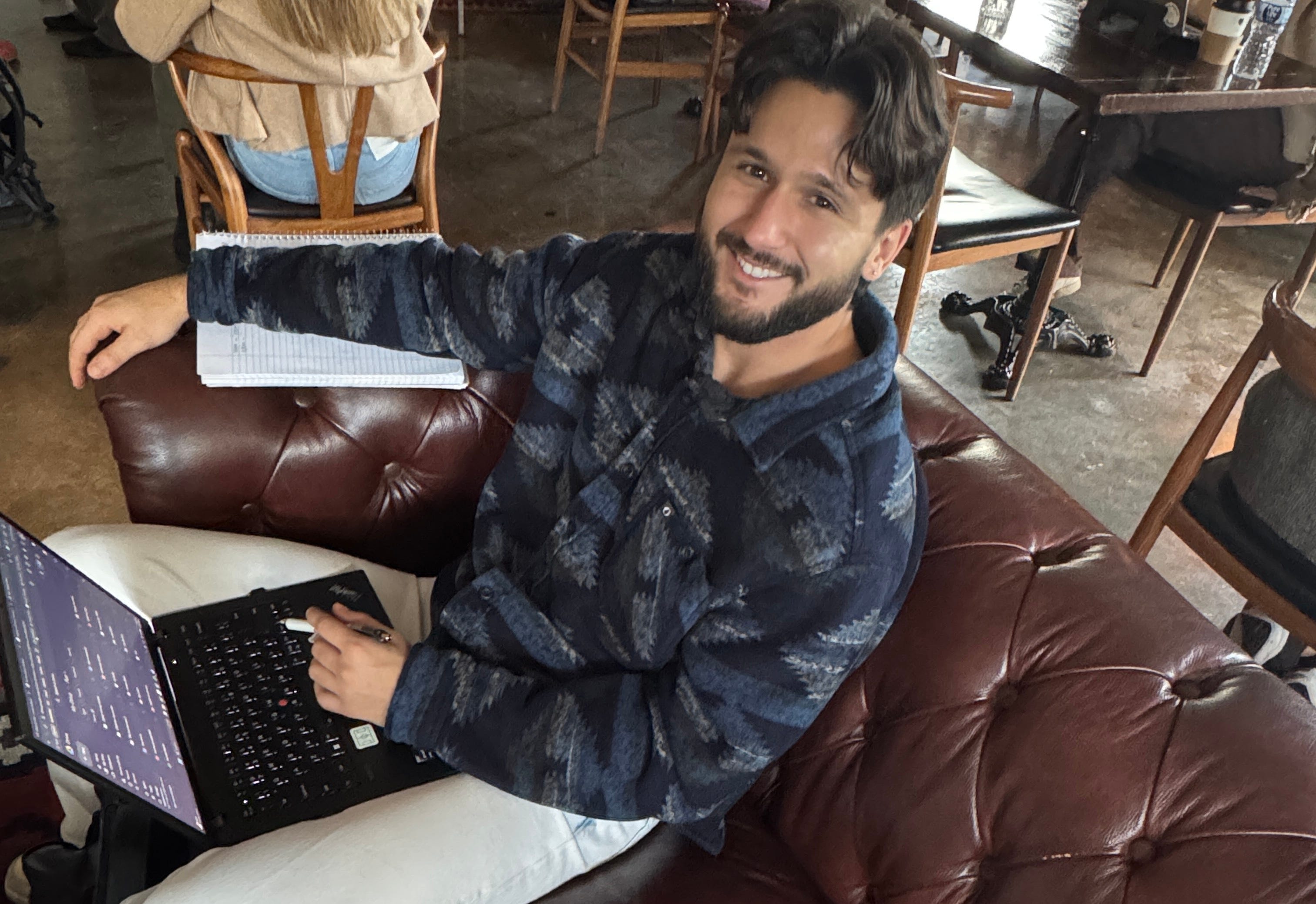
In the middle of a buzzing Houston coffee shop, surrounded by espresso machines and conversations in half a dozen languages, Ronen Melloul sits comfortably—exactly where he belongs. Pavon Coffee, a local staple, sets the scene for a conversation that mirrors the city itself: layered, diverse, reflective, and deeply human.
Born in Houston to a Venezuelan mother and an Israeli father, Ronen’s story is inseparable from the city’s DNA. His parents met in Willowbrook Mall, where his father owned a series of sunglasses shops—a detail that feels quintessentially Houston. From there, life unfolded in southwest Houston’s Fondren neighborhood, an area rich with Moroccan and North African Jewish culture.
Houston wasn’t just where Ronen grew up—it was where cultures blended seamlessly, shaping his worldview long before he could articulate it.
A Complicated Relationship With Home
Like many who grow up in Houston, Ronen’s relationship with the city hasn’t been simple.
“I was here for the first 18 years of my life,” he says. “So I had to be here for school. But when I finally had a choice, I left.”
Austin came first. Then time away. Then resistance.
When Ronen returned to Houston years later, it wasn’t because he wanted to—it was because he felt called to. His mother and brother were still here, and for him, family came first.
“There was a season where I didn’t want to be here at all,” he admits. “All my friends were in New York. I wanted to go to Australia. I value the beach and nature. I wanted somewhere else.”
But purpose has a way of pulling harder than preference.
It wasn’t until recently—within the last couple of months—that something shifted. After moving into his own place, intentionally building community, finding a church, and choosing how he engages with the city, Houston finally stopped feeling like an obligation.
“That’s when I felt it,” Ronen says. “When I started curating my life here—choosing where I go and where I don’t go—that’s when I felt like, okay… I’m home.”
Houston: A City That Mixes
When asked what Houston does better than anywhere else, Ronen doesn’t hesitate.
“Houston is a city of mixing,” he says. “That’s the core of it. We mix.”
He points to something uniquely Houston: the lack of zoning laws. Schools next to strip clubs. Auto shops beside restaurants. Cultures, businesses, and ideas stacked side by side without apology.
But for Ronen, that’s not chaos—it’s character.
“A little Indian food, a little Mexican food, a little Chinese, a little Moroccan,” he explains. “Houston knows how to take the best of each culture and put it into one space.”
That same philosophy applies to people. Houston doesn’t demand conformity—it rewards collaboration.
One Place That Explains Everything
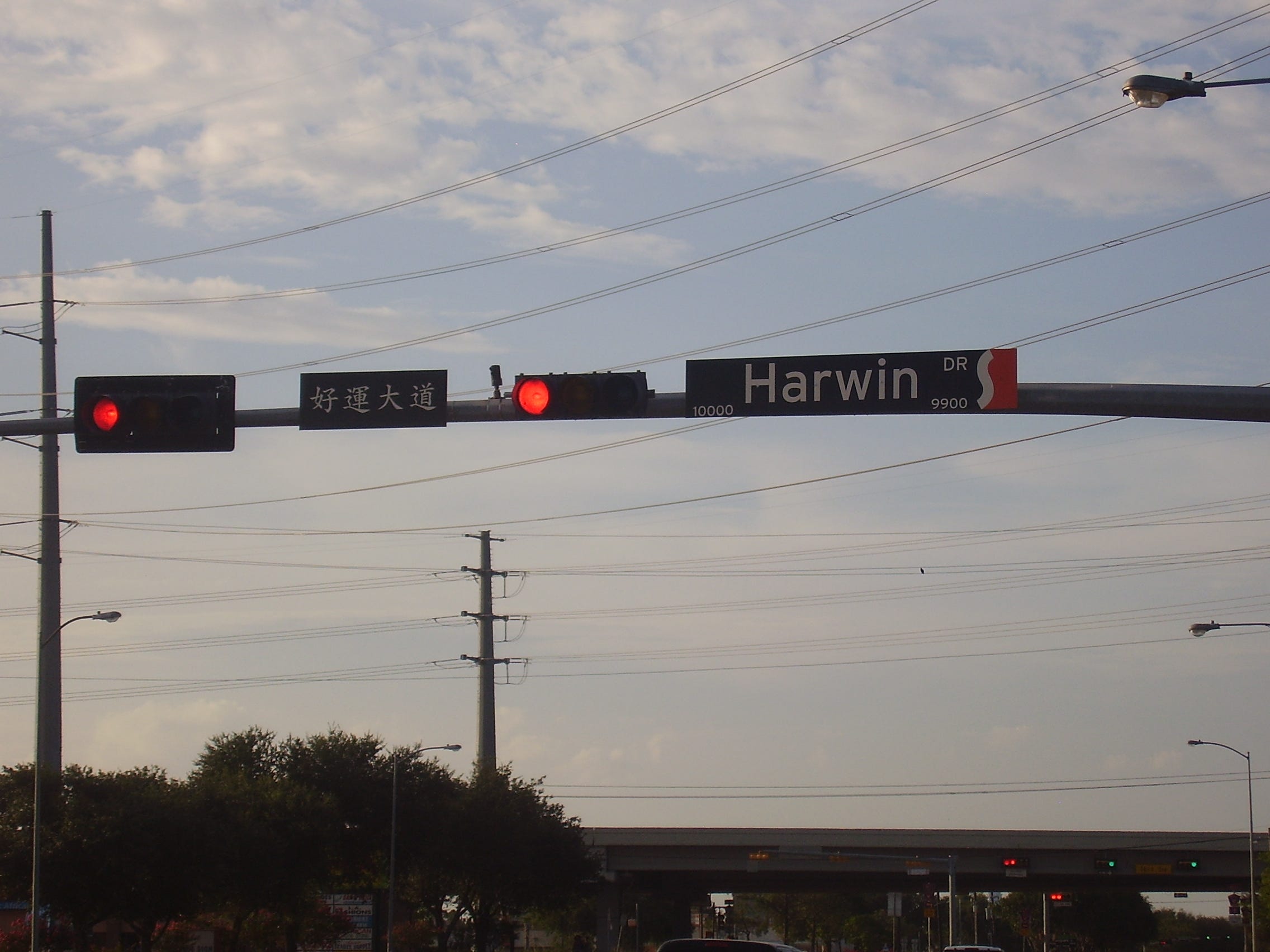
If someone only had 24 hours in Houston, Ronen wouldn’t take them to three places.
He’d take them to one.
Harwin Street.
Located in southwest Houston, Harwin is a dense strip of wholesale businesses run by immigrants from Iran, India, China, and beyond. Rugs, furniture, hookah products, and textiles—all operating side by side.
“This is the Mecca of immigrant business,” Ronen says. “Probably in the world.”
For him, Harwin explains Houston better than any skyline or museum ever could: cultures working together, respecting one another, building quietly, and thriving.
“That’s all you need to understand Houston.”
The Humble Hustle
Houston’s people, Ronen believes, move differently.
“There’s ambition here,” he says. “But it’s subtle.”
Unlike cities where success is loud and performative, Houston’s hustle is quiet, respectful, and almost conservative. Old money and new money coexist—Aston Martins and G-Wagons pass by without announcement.
“If you ask, they’ll tell you. They’ll even help you,” Ronen says. “But they’re not flashy about it.”
That energy mirrors his own approach to life.
“I like to hustle. I like to go get it,” he says. “But in silence.”
Faith as the Foundation
When asked who has shaped him most, Ronen points upward first—then inward.
“Most importantly, the church,” he says.
Specifically, Eden Church is a young congregation built with a simple goal: to reflect the original church described in the Book of Acts. No reinvention. Just the Word.
“That’s where I got baptized,” Ronen shares. “That’s where I really found the Holy Spirit.”
For him, faith isn’t an accessory—it’s the framework.
When Houston Tested Him
Houston’s biggest test wasn’t dramatic. It was mundane.
Traffic.
After graduating from college and stepping into a corporate sales role, Ronen found himself spending up to two hours a day stuck in traffic, morning and evening.
“My patience was tested big time,” he says. “I didn’t want that life. I didn’t want to conform to that system.”
That frustration became fuel.
“It gave me the stimulation I needed to say, ‘No—I’m not sitting in traffic anymore to work for somebody else.’”
Sometimes clarity comes not from inspiration but irritation.
A Man Made of Many Cultures
One thing people don’t immediately see about Ronen is how deeply multicultural he is—not just by heritage, but by curiosity.
“I value different ways of thinking. Different ways to live—good ways to live.”
Houston brings that out of him.
From Indian friends introducing him to natural soaps (yes, he bought 20 boxes) to conversations that open his mind to new traditions, Ronen absorbs what resonates and integrates it into his life.
“That’s Houston,” he says. “You meet people who live differently—and instead of judging, you get curious.”
What Houston Would Say to the World
After some reflection, Ronen answers the question he initially asked to revisit:
“If Houston could speak, what would it say?”
“Listen to that core feeling you have,” he says. “Make up your mind that it’s coming from God—and go do it.”
No hesitation. No overthinking.
“Quit playing around with it.”
The Legacy He Wants to Leave
When it comes to legacy, Ronen is clear.
“God is king. Jesus is king. The Holy Spirit is king,” he says.
“You can’t do this alone.”
He wants Houston to remember him as someone who lived that truth—and helped others believe it too.
“God is good. You can do all things with God,” Ronen says. “Whatever you want to do—go do it. You already did it. It’s already done.”
And in a city built on quiet hustle, deep faith, and powerful mixtures—that message feels right at home.
What stayed with me most after this conversation wasn’t a place or a story—it was conviction. The kind that doesn’t need volume to be felt. Houston rewards that kind of faith: the quiet obedience, the patient hustle, and the willingness to trust before clarity shows up. Maybe that’s the real invitation here—to listen closely, move decisively, and believe that what’s been placed on your heart is already enough.