

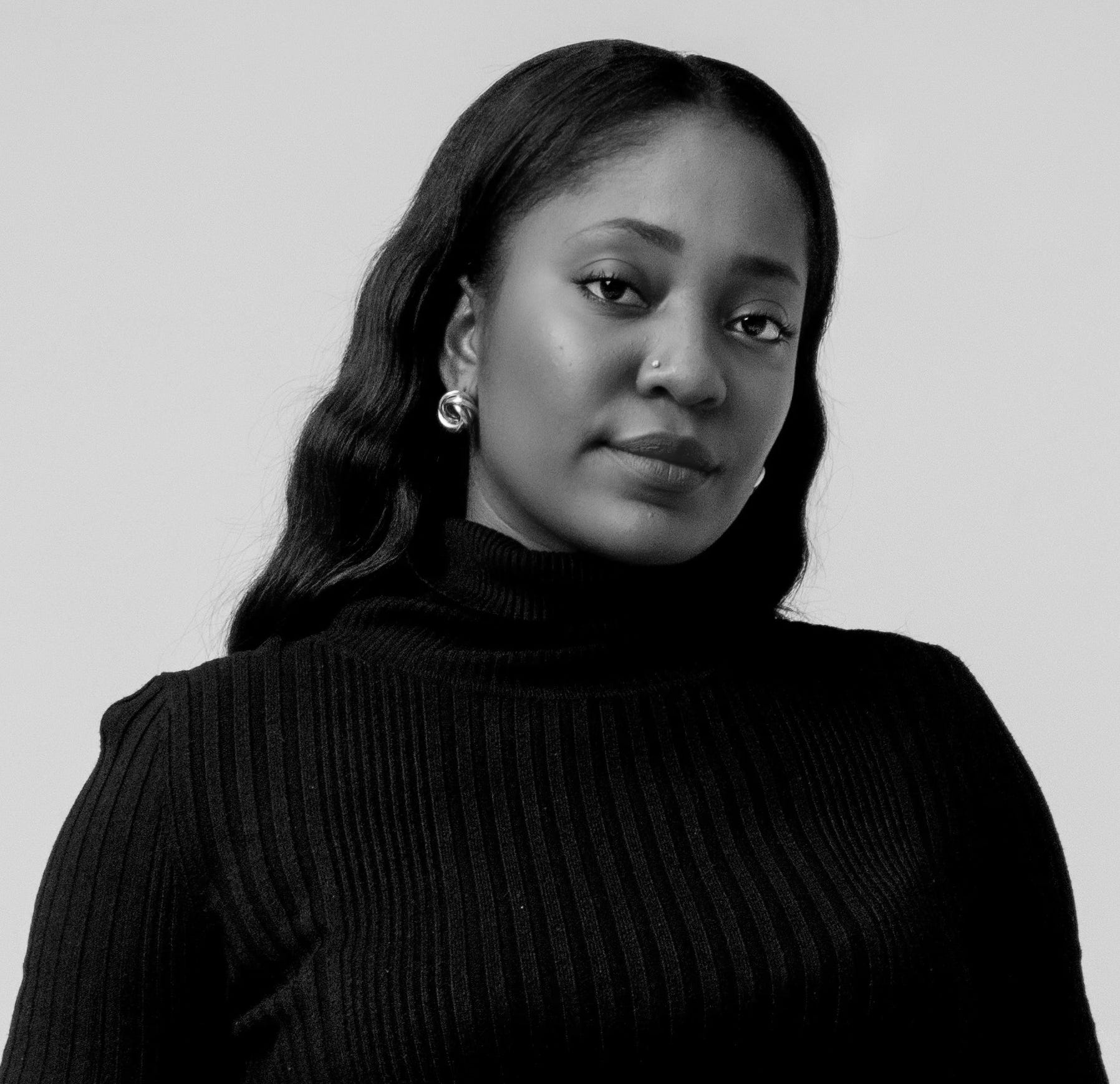
Inside Caribbean Creole Coffee, the vision announces itself before anyone explains it.
The smell of fresh beans hangs in the air, steady and familiar. Paintings line the walls, color, texture, pieces of someone thinking out loud. The staff greets people like they’ve been here before, even if they haven’t. Nothing about the space feels accidental. It feels assembled, like someone imagined it first and then worked backward until it existed.
For Towana Davilmar, that’s exactly what it is.
Coffee just happens to be the first thing you notice.
“I always tell people,” she says, “we’re just starting with coffee.”
Towana was born and raised in Haiti, in a household where building things, literally, was part of everyday life. Her father worked on multifamily properties, sketching out ideas, asking for opinions, and treating design like something that belonged to everyone in the room.
Years later, she would realize how much that shaped her. At the time, it just felt normal.
At 13, she moved to Florida. By 16, she had graduated from high school. She started college at Bethune-Cookman, but that plan didn’t last long. Her mother, a travel nurse, decided to relocate again, this time to Texas.
Towana didn’t have much say in it.
“I actually hated it at first,” she says.
They landed in Conroe, just outside Houston. It felt far from everything: friends, culture, familiarity. There weren’t many Haitians around. Getting anywhere meant driving. Even going out felt like a commitment.
“And people drove crazy here,” she says, laughing. “And I had just started driving.”
It wasn’t home. Not yet.
But she wasn’t alone. She had her twin sister, the one constant through every move.
“Every time we moved somewhere,” she says, “I knew I had a friend.”
At 18, the two of them tried to leave.
They got an apartment closer to the city, then decided that still wasn’t enough. Florida pulled at them, the friends, the familiarity, the version of life that felt easier. By 19, they were back.
For a while, it worked. They split off into their own relationships and built some independence. But the stability didn’t hold. Her sister joined the military. Towana considered it too but changed direction at the last minute, choosing architecture instead.
School came with a different kind of challenge. She was on her own now, in a more expensive city, trying to balance work, classes, and a lifestyle that wasn’t built for either.
“I was working and partying,” she says. “I didn’t do my work.”
Nights blurred into mornings. Clubs until 7 a.m., work by 9. School, if there was time.
It didn’t last.
Within a couple of years, she was back in Texas, this time alone.
The second time felt different, even if she didn’t want to admit it yet.
She moved back in with her mother. Her sister was gone. The built-in companionship she’d relied on her whole life wasn’t there anymore.
“It was a little bit lonely,” she says. “But I knew what I had to do.”
She stopped drifting. Started working overnight as a caregiver, taking care of elderly patients. Went to school during the day. Focused. She finished what she started.
“I understood that I needed to lock in.”
That stretch of time doesn’t come with big declarations or dramatic turning points. It’s quieter than that. Repetition. Fatigue. Discipline. The kind of work that doesn’t feel meaningful until much later.
But it changed everything.
She graduated with a degree in architecture. Job offers followed: an internship with the state of Illinois, a position at an architecture firm, and another in engineering. She chose the one that paid the most.
It was practical. Houston, she was learning, rewards that.
Even then, she wasn’t fully convinced.
Texas had become the place where things started to come together—school, work, structure—but it didn’t immediately feel like home. That part took longer.
Over time, though, Houston began to shift. Not all at once, but gradually. Through work. Through people. Through small discoveries that made the city feel less distant.
At some point, she stopped arguing about that.
Houston began to shift, not all at once, but gradually. Through work. Through people. Through small discoveries that made the city feel less distant.
“The food scene is really good,” she says. “And I started meeting people.”
She figured something out that doesn’t always come easily in a city this big:
“You kind of have to find your own people. If you don’t, you’re going to be lonely.”
Houston doesn’t organize itself for you. It doesn’t introduce you to the right rooms. But it leaves space, wide, unstructured space, for you to build your own.
For Towana, that mattered.
“I feel like Houston is good for Black people,” she says. “Immigrants thrive here. I don’t feel like there’s a barrier.”
It’s not a statement everyone would agree with. But it’s one she arrived at through experience, not theory.
Long before the coffee shop, she was already selling things.
Bracelets in college. Small products sourced and resold. Anything she could move, she would. It wasn’t about the title of being a business owner. It was simpler than that.
“I love selling to people,” she says.
The instinct came from somewhere familiar. Her father had done the same in Haiti, buying in bulk, moving goods, and building something out of what was available.
But her own path didn’t fully align with the structure of a nine-to-five, even inside architecture.
“You’re just creating someone else’s vision,” she says. “And I don’t like that.”
She wanted more control. More authorship. More room to think.
The transition came gradually, then all at once. She and her partner started a trucking business. It worked. It made money. Enough to give her an exit.
“I was like, okay,” she says. “I’m going to quit my job and figure out what I want to do next.”
What came next looks, on the surface, like a coffee shop.
But even that decision wasn’t random.
“Coffee is universal,” she says. “It brings people together.”
In Haiti, coffee was part of daily life. Mornings before school. Bread and a cup to start the day. Familiar, grounding. Something shared.
In Houston, she noticed something else: people didn’t really know Haitian coffee. Not the way they did in places like Miami.
So she brought it here.
But the shop wasn’t meant to stand alone.
“People think Caribbean Creole Coffee is just about the coffee,” she says. “No. The vision is bigger.”
The space itself hints at that.
The paintings. The openness. The feeling that you’re allowed to stay a while, to think, to talk, to create. It doesn’t feel like a place built for quick turnover. It feels like a place built with intention.
Towana is studying urban planning now, layering that on top of her background in architecture. She talks about development the way some people talk about storytelling, how spaces shape behavior and how design can either separate people or bring them into the same room.
What she’s imagining goes beyond a café.
A place where people can live and work in the same environment. Where an artist’s studio might sit below their apartment. Where a coffee shop connects to a workspace, which connects to a place to host clients, record, paint, or build something.
“Instead of having to drive everywhere,” she says, “what if everything is in your community?”
It’s a practical idea, but it’s also personal.
She knows what it feels like to be disconnected. To move between places that don’t fully hold you. To search for creative space and find waitlists instead.
So she’s trying to build the thing she couldn’t find.
Ask her about Houston now, and she doesn’t describe it the way she did at 16.
“It has something for everybody,” she says. “You just have to take the time to find it.”
That time matters. The years of leaving and coming back. The frustration. The adjustment. The work.
Caribbean Creole Coffee feels less like a finished product than a first version, something in progress, something expanding. A place where the early pieces of a larger idea are already visible if you know what to look for.
Towana still talks about what comes next. Master-planned communities. Spaces designed with intention. Environments where creativity and daily life don’t have to live in separate places.
For now, though, it starts here.
A room filled with the smell of coffee. Paintings on the walls. People are coming in, sitting down, and staying longer than they planned.
A small, working version of a bigger thought.
And a city she once tried to leave is still making room for what she’s building next.