

Houston is a city built on motion, people passing through, people starting over, people carrying more history than they let on. Sometimes the most important stories aren’t planned or scheduled. They happen when you slow down long enough to listen.
I met Mark and Zoe on a day when the city felt closed off, when conversations ended before they could begin. What started as a casual exchange in Third Ward became something else entirely: a story about two people who lived many lives in the same city, fell apart separately, and found their way back to each other with something worth protecting.
This isn’t a story about success in the traditional sense. It’s about timing, resilience, and what it takes to rebuild a life when there’s no safety net, only the decision to keep going.
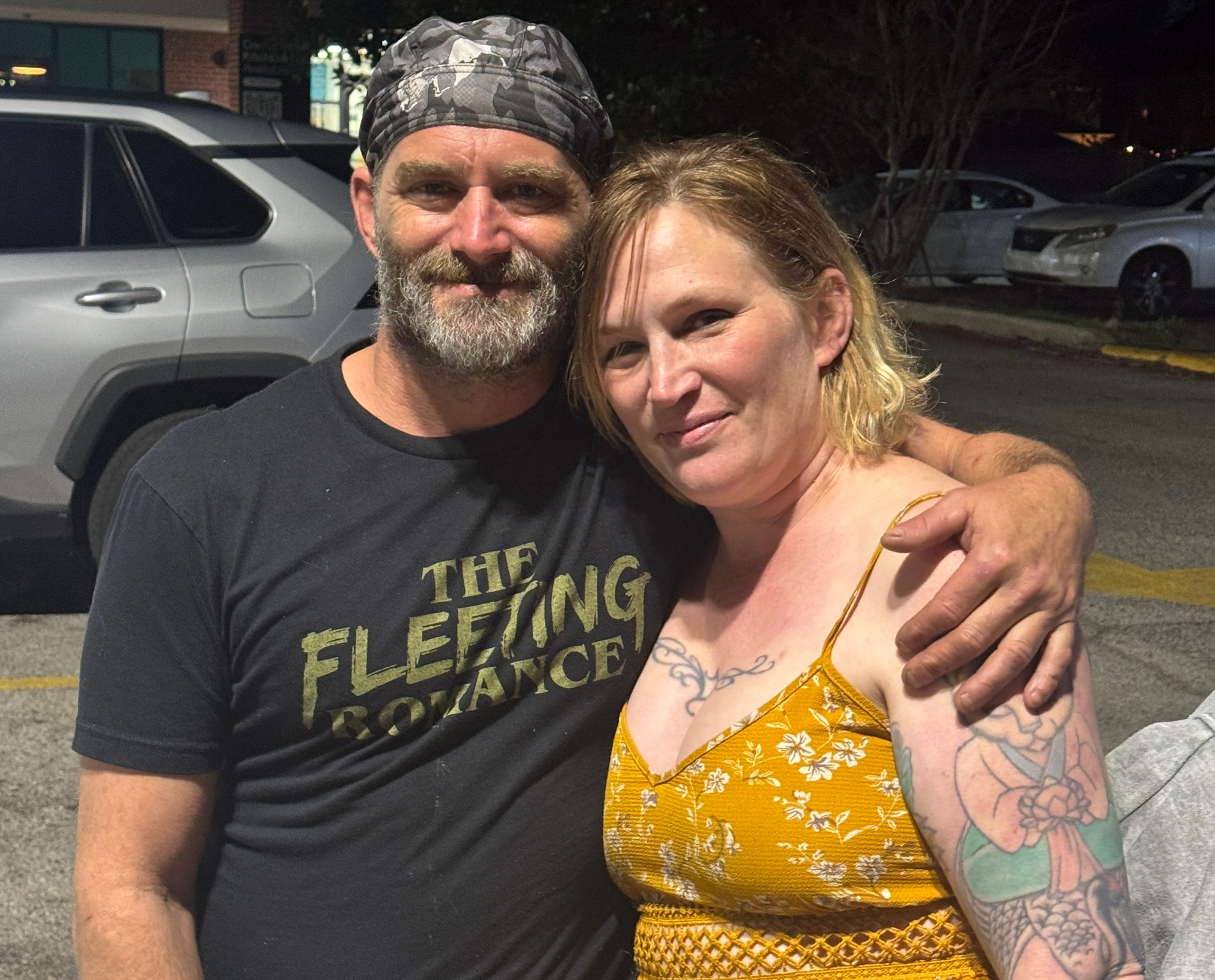
They’re standing in Third Ward, talking about it like people talk about weather, casual, unguarded, almost dismissive of the weight it once carried.
“Third Ward used to be bad,” Mark says, scanning the street like he’s flipping through old photographs. “This used to be the hood.”
Zoe nods. “Yeah. It was dangerous.”
There’s no drama in the way they say it. No performance. Just fact. The kind that only comes from having lived long enough in a place to remember when it demanded something from you just to exist there. Around them now, the neighborhood feels calmer, cleaner, more expensive. Safer. But memory doesn’t gentrify as fast as buildings do.
They’re both born and raised in Houston. Not visitors. Not transplants. Houston didn’t just watch them grow up; it held every version of them.
Before you know anything else about them, that’s what you need to understand.
Houston is the kind of city where difference doesn’t stand out until you leave it. Growing up here, diversity feels ordinary. It’s only when you go somewhere else, somewhere quieter, tighter, more uniform, that you realize what you were swimming in all along.
“You don’t really notice it until you leave,” Mark says. “If you’ve been raised in it, you don’t think about it.”
Houston doesn’t ask you to fit a mold. There’s no dress code. No rigid hierarchy. You can walk downtown and pass a man in a tailored suit who owns a Maserati, then a man arguing loudly with no one in particular, and nobody flinches. The sidewalk holds them both.
“It doesn’t matter how you dress,” Mark says. “You can go anywhere.”
Zoe agrees. “Other places judge you right away. Here, people just let you be.”
Houston is also about money, not status, not pedigree, but motion. Hustle. Opportunity that doesn’t care where you came from, only what you’re willing to do next.
“There’s not a lot of red tape here,” Mark says. “Opportunity is everywhere. For anything.”
That part matters. Because opportunity, in Houston, is neutral. It doesn’t sort itself into good or bad. It just exists.
And for a long time, Mark and Zoe took the wrong kind.
“We lived on the streets,” Mark says, like he’s mentioning a past address. “We battled with addiction.”
Zoe doesn’t correct him. She doesn’t soften it. “We had a lot of problems.”
They don’t offer a timeline. They don’t stack tragedies for effect. Prison. Homelessness. Violence. Survival. It all enters the conversation the way Houston traffic does, unavoidable, familiar, no longer surprising.
Mark points to his forehead and mentions, almost offhandedly, a scar from being pistol-whipped after a robbery. The story doesn’t linger. It doesn’t need to. It’s just one of many lives they lived.
They were together when they were teenagers. Together when things were spinning out of control.
“We were fucking up,” Mark says plainly.
Houston didn’t push them there, but it didn’t stop them either. In a city where anything is possible, it’s easy to grab what’s closest. What numbs. What distracts. What feels like relief in the moment.
Eventually, they separated.
Not in a dramatic, cinematic way. Just the slow drift that happens when survival pulls people in different directions. Mark left Houston for a while. He knew he had to.
“I had to get out to get right,” he says. “Too many bad opportunities.”
Zoe stayed. And lived what she describes as “five different lives.” Houston kept changing around her, neighborhoods shifting, boundaries blurring, while she carried her own weight through it.
They weren’t witnesses to each other’s pain anymore. Each had to face their consequences alone.
Then came the moment that snapped everything into focus.
“When they threatened to take my kids,” Mark says, “everything changed.”
There’s no buildup. No attempt to dramatize it.
“That’s the only reason I’m alive,” he adds. “That’s the only reason I even cared about making money.”
Zoe says it just as clearly. “Kids. That’s it.”
This wasn’t redemption. It wasn’t a sudden awakening. It was fear sharp enough to cut through denial. A line you don’t cross twice.
Mark says his whole personality changed. Not because he found hope, but because he found something he refused to lose.
That’s when the lives they were living started to slow down. That’s when direction appeared.
Years later, they found their way back to each other.
Not as teenagers. Not as people chasing chaos. But as adults who had already paid for their past.
“We got back together as grown-ups,” Mark says.
The difference matters. This wasn’t a reunion built on nostalgia. It was built on alignment. They weren’t trying to save each other anymore. They were finally moving in the same direction.
Today, the proof isn’t in speeches or slogans. It’s in details.
Properties. Not one, several. One they live in. Others generating income. Another on the way. A trust set up for their kids so the instability they grew up with doesn’t repeat itself.
“We’re building our empire,” Mark says, and it doesn’t sound like bravado. It sounds like insurance.
They don’t talk about success like people who are trying to sell you something. They talk about it the way people do when they’ve lost everything before and aren’t interested in losing it again.
They talk about buying property the same way they talk about survival, carefully, practically, without fantasy. Not chasing what looks good, but what lasts. Old houses built by craftsmen. Places they can work on themselves. Decisions made with the long view in mind.
“We want this to stay in our family,” Mark says. “This is for our kids.”
That’s the through line now. Everything runs through that filter. Not ego. Not status. Stability. Insurance against the chaos they already know too well.
They don’t pretend Houston suddenly became easy. They know the city will test you. They’ve already been tested here, in ways that don’t make it into brochures or highlight reels. But they also know what Houston rewards: people who are willing to put in the work, people who don’t wait to be invited, people who understand that opportunity doesn’t come dressed up.
They talk about community the same way they talk about money, something you build, not something you’re owed.
“Be cool with your local convenience store guy,” Zoe says, half-smiling.
It sounds small until you understand what she means. Don’t judge people. Don’t look past the ones who show up in your life every day. Respect the people around you. Build relationships where you are.
Mark nods. He takes it further.
“Make friends with the person next to you at the bus stop,” he says. “The guy on the bench. The cashier. Some of the best conversations I’ve ever had were with total strangers.”
This is how they survived. This is how they came back. Not through shortcuts or saviors, but through willpower, work, and people.
They were together when they were teenagers, spiraling. They lived separate lives that nearly destroyed them. And years later, they found each other again, not because the past pulled them back, but because they were finally strong enough to move forward together.
Standing in Third Ward now, in a place that used to demand vigilance and now feels almost ordinary, their story doesn’t sound like triumph. It sounds like resolve.
They didn’t erase who they were.
They outgrew it.
And in a city that offers everything, good and bad, they learned how to choose, deliberately, what kind of life to build next.